The culture and society of Nepal are characterized by a rich and diverse heritage that has
evolved over centuries. This heritage is reflected in various aspects such as dance, music,
art, language, literature, philosophy, religion, festivals, and architecture. Dance and music
hold significant importance in Nepalese culture, with traditions dating back to ancient times.
Various dance forms exist, each with its unique style and significance, often depicting
themes from daily life, rituals, and folklore. Music accompanies these dances, adapting to
the themes being portrayed. Nepal boasts linguistic diversity, with over 123 languages
spoken, stemming from Indo-Aryan, Tibeto-Burman, and indigenous language groups.
Nepali, written in Devanagari script, serves as the official language and lingua franca, while
other languages like Maithili also hold importance. Religiously, Nepal is predominantly
Hindu, with significant Buddhist, Muslim, and Kirant minorities.
The country is home to
sacred sites of both Hinduism and Buddhism, reflecting a blend of religious traditions.
Philosophically, Hindu and Buddhist ideologies influence Nepalese thought, with elements
of Kashmir Shaivism, Tibetan Buddhism, and tantric traditions. Festivals form an integral
part of Nepalese life, with celebrations lasting from one to several days. Dashain, Tihar,
Buddha Jayanti, and Maha Shivaratri are among the prominent festivals, marked by dancing,
music, and feasting. Architecture and archaeology also play a vital role in Nepal's cultural
landscape, with numerous significant sites identified across the country. The Nepal Heritage
Society has catalogued over 1,200 such sites outside the Kathmandu Valley, showcasing the
country's rich architectural and archaeological heritage. Nepal is famously attractive
for adventure seekers, mountain hikers and rock climbers. Apart from a gorgeous
destination for adventure, it is famous for its local lifestyle, culture, traditions, historical
heritages and ever welcoming nature of Nepalese.
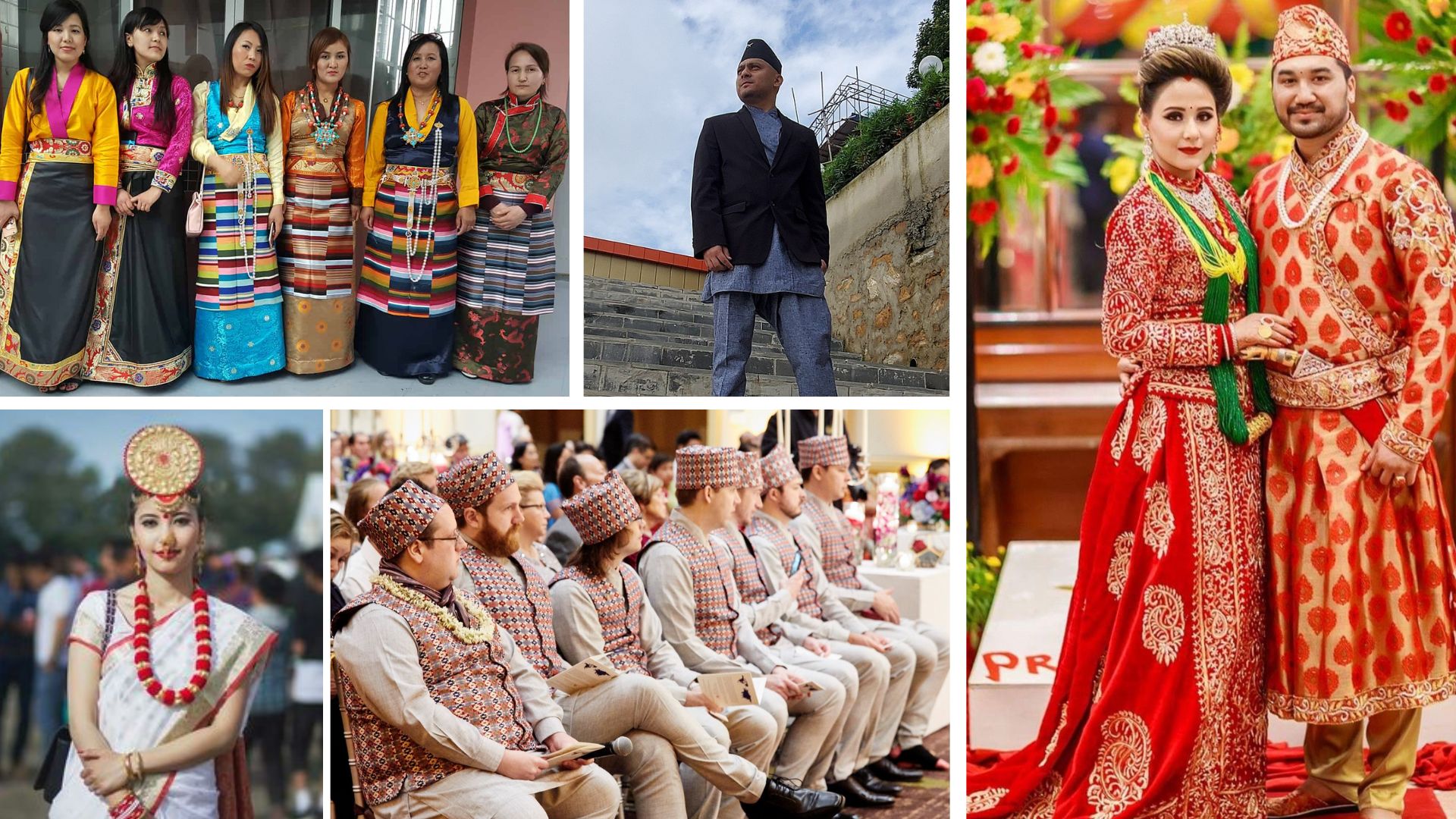
Nepal Clothing
Nepal boasts a rich cultural landscape, being home to over 100
ethnic groups with diverse
traditional costumes, jewellery, customs, and accessories. However, this article focuses solely
on the main national costumes. Additionally, travellers on Nepal tours may have the
opportunity to experience wearing traditional Nepalese attire firsthand. The traditional Nepali
female folk costume, known as "Kurta Suruwal," is a representation of the country's cultural
heritage and is deeply ingrained in the daily lives of Nepali women. This attire consists of
three
key components that combine to create a distinct and elegant look. In Nepali women's
traditional attire, the blouse is a vibrant and eye-catching piece, often adorned with an array
of vivid colours and intricate patterns and prints.
Societies make the way of life, and the
way of life decides the way of life of a specific race and group of individuals. Nepal has
numerous standings and ideologies, languages, and shading. Different languages had different
dilations and festivals. Brahmin, Chhetri, Newar, Rai, Tamang, Limbu
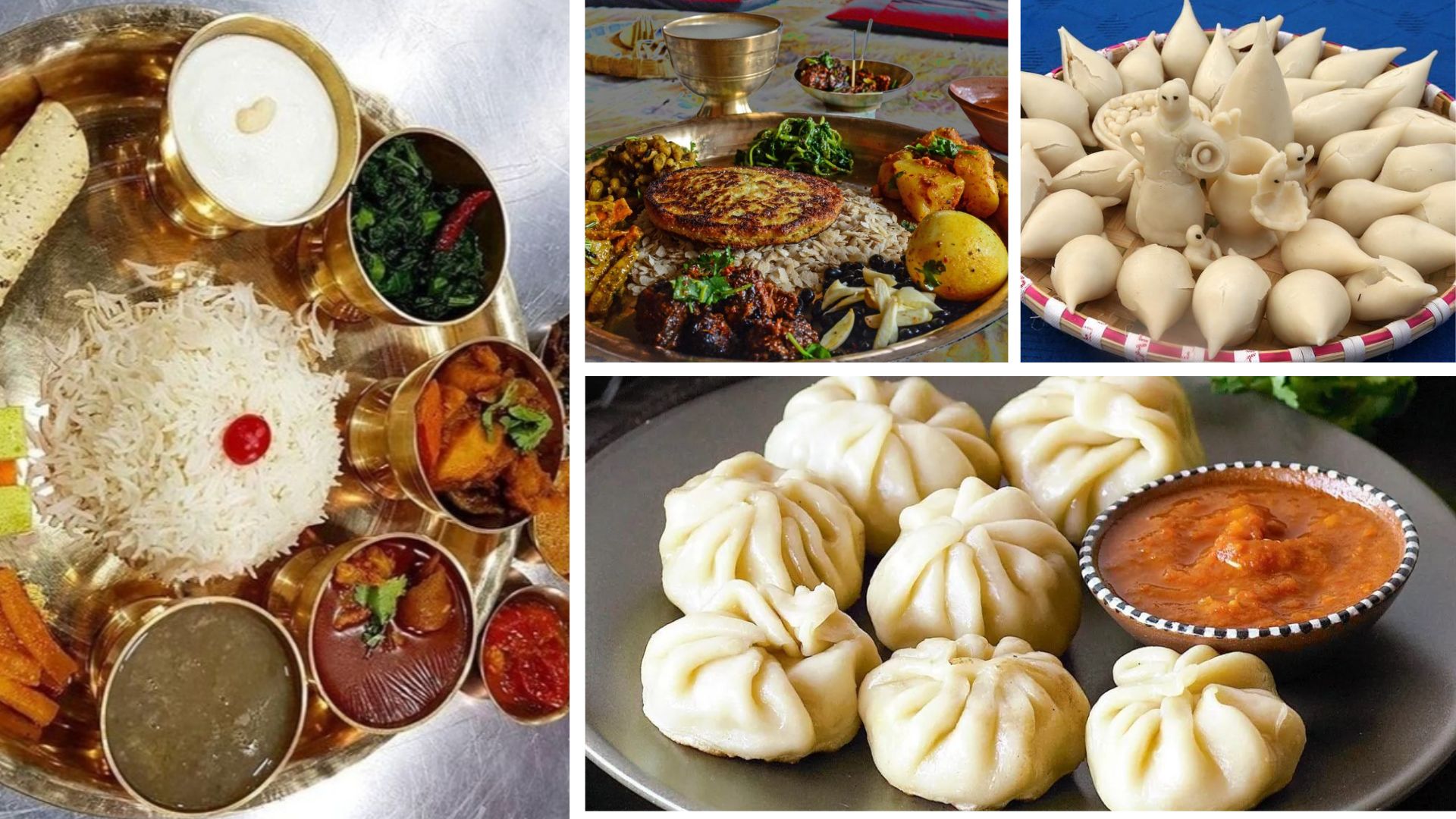
Nepal Food
Yomari
:
Yomari is a Newari food eaten during the festival of Yomari Punhi in Nepal. It signifies the
month of Poush in the Nepal Era Calendar which falls in Purnima
(a full moon day). It is also known by a name Ya-Mari. 'Ya' means
like and 'Mari' means delicacy. It is also prepared during special
occasions like birthdays and baby showers
Momos
:
A memo is a small round steamed, dumpling or in a half-moon
shape, with a juicy meat or vegetable filling. A hearty and juicy
morsel, as it is a small dumpling that can be popped whole in the
mouth. An experienced momo cook can fashion the wrap deftly and
artistically around the tiny filling to make a momo look very elegant.
Newari
Khaja
:The Newari Khaja Set has a long history in Nepal, dating back to the Newar community’s
ancient traditions. The Newars, an ethnic group native to the
Kathmandu Valley, are known for their unique cultural practices and
cuisine.
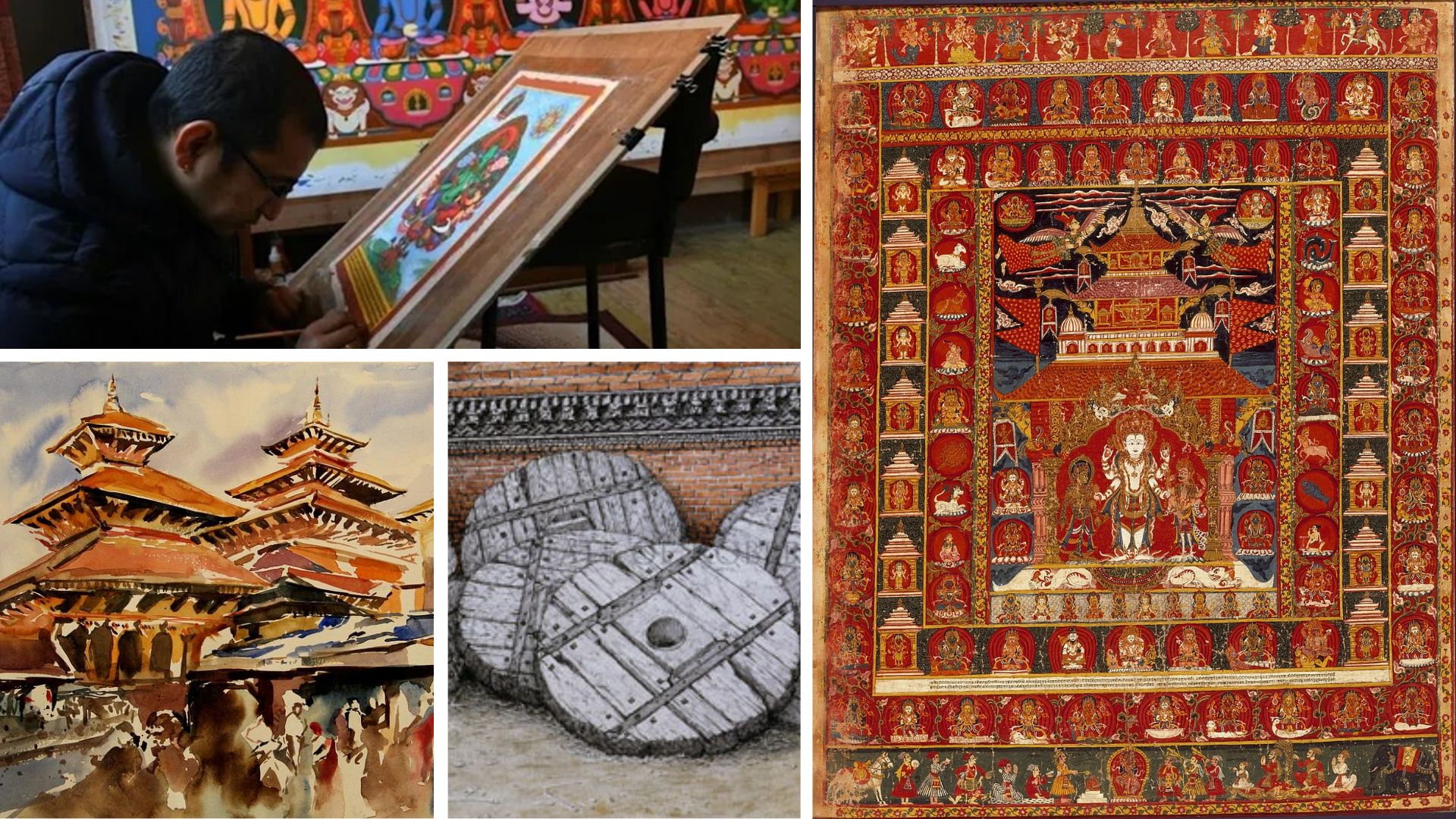
Nepal Art
Arts of Nepal provides common interactive platform for Nepali artists, there by exposing
their best artworks and talents to the world. artsofnepal.com houses one of the largest
and wide collections of Nepali arts ranging from traditional art like Newari Paubha,
Thangka, Mithila to contemporary art. Nepal known as a land of diverse cultures,
languages, ethnicities and religions, has to offer amazing variety of artworks. However,
these artists remain in dark unknown to the outside world.
Arts of Nepal is proud to bring
out the hidden talents out of the closet, while appreciating and respecting their work,
presenting their work to the public. The art and culture of Nepal have been strongly
influenced by the religious beliefs of the country. The artwork is decorative, delicate, and
very
beautiful. Nepal art is strongly influenced by the culture of the people and the two really go
together and are interwoven. The two most typical forms of art are paintings and sculptures.
Nepal’s art and culture have changed little over the centuries through western influences are
slowly starting to affect some modern artists.

Nepal Film Industry
Nepal's film industry, though relatively young, holds a significant position in the country's cultural heritage. Despite its modest beginnings, Nepali cinema has established its own unique identity, blended elements of Bollywood while also incorporating distinct narratives and styles. Many Nepali films draw inspiration from Bollywood, India's renowned film industry, adopting its trademark song-and-dance sequences and dramatic storytelling techniques. This infusion of Bollywood flair adds a sense of familiarity for audiences, contributing to the popularity of Nepali films both domestically and internationally. Traditionally, Nepali filmmakers have worked with 16-millimeter film due to technological constraints and resource limitations. This medium, while offering challenges, has also fostered creativity and resourcefulness among filmmakers, resulting in a distinct aesthetic characteristic of Nepali cinema. Kathmandu, as the capital and primary hub of the Nepali-language film industry, holds a special place in the filmmaking landscape.
Nepal Economy
Kathmandu, Nepal 20 September 2023 -The economic forecast for Nepal presents an
optimistic outlook, with expectations of substantial growth in the fiscal year (FY) 2024.
Projections indicate a robust expansion of 4.3% at market prices, reflecting a significant
improvement from the estimated growth rate of 1.9% experienced in FY2023. Increased
Investment: Nepal has been actively seeking foreign and domestic investment to stimulate
economic growth. Efforts to attract investment in infrastructure, tourism, and manufacturing
sectors are expected to contribute to the overall expansion of the economy.
While the
projected growth rate of 4.3%
presents a positive outlook for Nepal's economy, challenges such as poverty, inequality,
infrastructure deficits, and environmental sustainability remain pertinent. Addressing these
challenges requires sustained efforts from government, private sector stakeholders, and
development partners to ensure inclusive and sustainable economic growth